ADHD Symptoms: Complete Guide to Recognition and Understanding
Attention-Deficit/Hyperactivity Disorder (ADHD) is characterized by persistent patterns of inattention, hyperactivity, and impulsivity that vary significantly based on age, gender, and individual differences. This comprehensive guide covers all ADHD symptom presentations and how to recognize them.

Understanding ADHD Symptoms
ADHD is not a character flaw, laziness, or lack of intelligence. It is a neurodevelopmental condition that affects how the brain processes information, regulates attention, and manages executive functions like planning, organization, and impulse control.
ADHD symptoms manifest across three primary dimensions: inattention, hyperactivity, and impulsivity. However, individuals may present with different combinations of these symptoms, and the way symptoms appear changes significantly across the lifespan.
Key Point: ADHD symptoms can vary depending on age, gender, environment, and the individual's ability to compensate. Some people develop sophisticated coping strategies that mask their symptoms, leading to late diagnosis despite lifelong struggles.
ADHD Symptoms Overview
Visual breakdown of the three core symptom dimensions of ADHD. Each category contains specific behavioral and cognitive symptoms that vary by individual presentation.
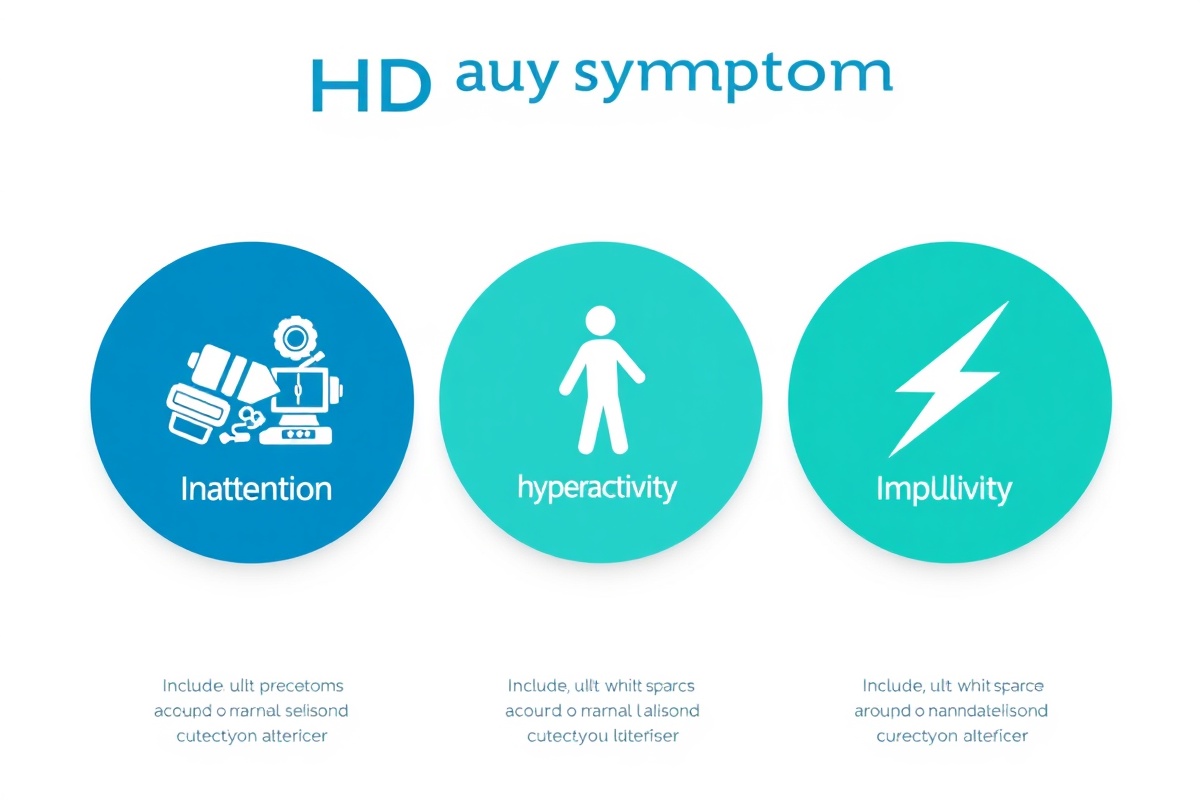
The Three Dimensions of ADHD Symptoms
1. Symptoms of Inattention
Inattention refers to difficulties with sustained attention, focus, and task completion. People with inattentive ADHD often struggle to maintain concentration even on tasks they find interesting.
• Difficulty sustaining attention on tasks or conversations
• Making careless mistakes due to inattention to details
• Difficulty organizing tasks and managing time
• Frequently losing important items (keys, wallet, documents)
• Forgetfulness in daily activities and responsibilities
• Appearing not to listen when directly spoken to
• Difficulty following through on instructions or assignments
• Avoiding or delaying tasks requiring sustained mental effort
2. Symptoms of Hyperactivity
Hyperactivity involves excessive motor activity, restlessness, and difficulty staying still. In children, this is often obvious. In adults, hyperactivity may be experienced internally as constant mental activity or restlessness.
• Fidgeting or squirming in seat
• Difficulty remaining seated when expected to do so
• Running or climbing excessively (in children)
• Excessive talking or difficulty being quiet
• Internal restlessness and feeling "driven"
• Constant activity or motion even when inappropriate
• Difficulty engaging in quiet leisure activities
• Restlessness during meetings, lectures, or extended sitting
3. Symptoms of Impulsivity
Impulsivity refers to acting without thinking, difficulty waiting, and poor inhibitory control. This dimension involves difficulty resisting urges and making rash decisions.
• Interrupting or intruding on others' conversations
• Blurting out answers without being called on
• Difficulty waiting their turn in games or activities
• Acting without considering consequences
• Making impulsive purchases or financial decisions
• Difficulty resisting urges or impulses
• Risky or reckless behavior without weighing risks
• Emotional outbursts or difficulty controlling anger
How ADHD Symptoms Vary by Age
Children (Ages 4-12)
- • Obvious hyperactivity and fidgeting
- • Difficulty sitting still in class
- • Excessive talking and interrupting
- • Difficulty following instructions
- • Loses school materials frequently
- • Symptoms very visible to teachers
- • Play is often loud and disruptive
Adolescents (Ages 13-17)
- • Hyperactivity decreases noticeably
- • Inattention becomes more obvious
- • Academic struggles intensify
- • Organizational challenges prominent
- • Emotional dysregulation
- • Risk-taking behaviors increase
- • Procrastination on assignments
Adults (Age 18+)
- • Internal restlessness rather than visible hyperactivity
- • Chronic procrastination and disorganization
- • Difficulty managing work responsibilities
- • Time management problems
- • Relationship and communication issues
- • Often compensate with hard work
- • May go undiagnosed despite lifelong struggles
ADHD Symptoms in Children
In children, ADHD symptoms are often more obvious and disruptive, making diagnosis more straightforward. Children with ADHD may show:
- • Difficulty staying seated during classroom instruction or meals
- • Talking excessively compared to peers
- • Running or climbing when sitting is expected
- • Difficulty waiting for their turn in games or activities
- • Blurting out answers before questions are completed
- • Frequently losing school materials, lunch boxes, or personal items
- • Difficulty following multi-step instructions
- • Grades below their ability level
- • Impulsive behavior that sometimes results in injury
- • Difficulty playing quietly or engaging in quiet activities
Important: Symptoms must appear before age 12, occur in multiple settings (home and school), and persist for at least 6 months to meet diagnostic criteria. Occasional behavior is normal; ADHD involves persistent patterns that impair functioning.
ADHD Symptoms in Adults
Adult ADHD often looks quite different from childhood ADHD. Hyperactivity typically decreases, but attention difficulties, impulsivity, and executive dysfunction remain. Many adults have learned to compensate but still struggle:
Work & Productivity
- • Chronic procrastination on routine tasks
- • Inconsistent productivity
- • Difficulty prioritizing among multiple tasks
- • Working best under last-minute pressure
- • Trouble organizing work or managing projects
- • Starting many projects but finishing few
Personal & Daily Life
- • Difficulty managing household organization
- • Time management problems and chronic lateness
- • Frequently losing important items
- • Difficulty remembering appointments or deadlines
- • Impulsive spending or financial decisions
- • Difficulty maintaining relationships due to forgetfulness
Adult Compensation: Many high-functioning adults with ADHD develop sophisticated coping strategies such as relying on reminders, working longer hours, using stress as motivation, or hyper-focusing on interesting projects. While these strategies enable success, they often come at the cost of chronic stress and burnout.
ADHD Symptoms Differ Between Genders
ADHD presents differently in males and females, leading to significant underdiagnosis in girls and women:
Boys with ADHD
- • Obvious hyperactivity and impulsivity
- • Disruptive behavior in class
- • More likely to be referred for evaluation
- • Diagnosed more frequently
- • Symptoms cannot be hidden
- • Earlier average age of diagnosis
Girls with ADHD
- • Predominantly inattentive presentation
- • May appear quiet or compliant
- • Hyperactivity internalized rather than external
- • Less likely to be referred
- • Symptoms may appear as shyness or lack of engagement
- • Often diagnosed later in life (adolescence or adulthood)
This gender difference in symptom presentation leads to a significant gender gap in ADHD diagnosis, with girls often going unrecognized throughout childhood and experiencing years of unnecessary struggle.
ADHD Presentation Types
ADHD is not a one-size-fits-all condition. The DSM-5-TR recognizes three distinct presentations based on symptom patterns:
Predominantly Inattentive Type
Primary symptoms are attention-related with minimal hyperactivity or impulsivity.
- • Difficulty focusing and organizing
- • Forgetfulness and disorganization
- • Difficulty completing tasks
- • Often undiagnosed or misdiagnosed
Predominantly Hyperactive-Impulsive Type
Primary symptoms are hyperactivity and impulsivity with less noticeable inattention.
- • Restlessness and constant motion
- • Impulsive decision-making
- • Interrupting and difficulty waiting
- • Less common presentation
Combined Type
Symptoms of inattention, hyperactivity, and impulsivity all present significantly.
- • All three dimensions present
- • Most commonly diagnosed type
- • Most obvious symptom presentation
- • Typically recognized earliest
ADHD Screening and Assessment
If you recognize ADHD symptoms in yourself or a loved one, professional assessment is important. While this guide provides information about ADHD symptoms, only a qualified mental health professional or physician can diagnose ADHD.
You can start with our interactive ADHD screening questionnaire, which provides insight into whether ADHD assessment may be beneficial:
Complete a confidential ADHD screening to better understand your symptoms
Take Free ADHD Screening TestWhen to Seek Professional Evaluation
Consider professional ADHD evaluation if you or someone you care about experiences:
- • Persistent difficulty with attention, focus, or organization
- • Symptoms that interfere with school, work, or relationships
- • A pattern of these difficulties throughout life
- • Symptoms that occur in multiple settings (home, school, work, social)
- • Academic or workplace underperformance despite ability
- • Emotional difficulties related to attention or organization problems
- • Symptoms that have persisted for at least 6 months
- • Family history of ADHD or related conditions
Early evaluation is beneficial: Early diagnosis and intervention can prevent secondary problems like low self-esteem, academic failure, social difficulties, and depression. ADHD is highly treatable, and many individuals experience significant improvements in functioning with appropriate treatment.
Frequently Asked Questions
Are ADHD symptoms the same for everyone?
No. ADHD symptoms vary significantly based on age, gender, environment, and the individual's ability to compensate. Some people have primarily inattention, others primarily hyperactivity-impulsivity, and many have a combination. This variability sometimes leads to underdiagnosis in certain populations.
Can ADHD symptoms be confused with other conditions?
Yes. ADHD symptoms can mimic anxiety, depression, learning disabilities, sleep disorders, or thyroid problems. A comprehensive professional evaluation is needed to distinguish ADHD from other conditions that may produce similar symptoms.
Can someone develop ADHD as an adult?
ADHD does not develop in adulthood; it is a lifelong neurodevelopmental condition that begins in childhood. However, many people are not diagnosed until adulthood because their symptoms were missed or because they developed successful compensation strategies.
Are ADHD symptoms permanent?
ADHD is a lifelong condition, but symptoms can be effectively managed with treatment. Many individuals experience significant improvements in focus, organization, and functioning with appropriate medication, behavioral strategies, and lifestyle modifications.
Why are girls with ADHD underdiagnosed?
Girls often present with predominantly inattentive ADHD and may appear quiet or compliant, making symptoms less obvious. Hyperactivity in girls is internalized. Teachers and parents may attribute symptoms to shyness or lack of engagement rather than recognizing ADHD, leading to delayed diagnosis.
Can someone have high intelligence and ADHD?
Yes, absolutely. ADHD exists across all intelligence levels. Some highly intelligent individuals with ADHD develop sophisticated compensatory strategies that enable academic or professional success despite underlying executive function challenges, sometimes leading to late diagnosis.
Recognize ADHD Symptoms? Take the First Step
Our comprehensive ADHD assessment can help you understand your symptoms better and determine if professional evaluation is appropriate.