Panic Attack Symptoms Explained
Panic attacks are intense episodes of sudden, extreme anxiety. Learning to recognize panic symptoms and understand that panic attacks are treatable helps reduce fear and enables effective management.
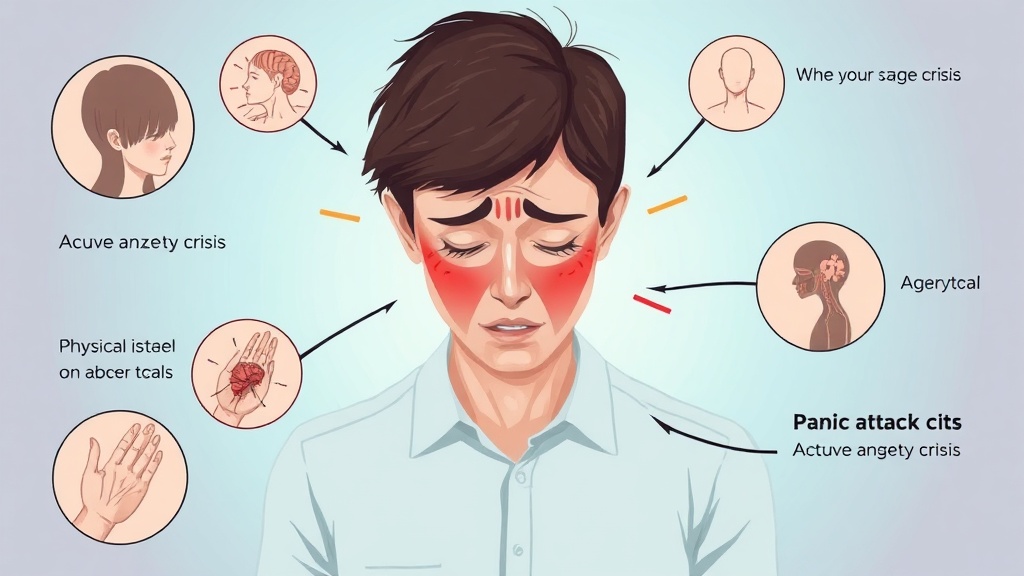
Physical Symptoms of Panic Attacks
Panic attacks cause intense physical symptoms that often feel like a medical emergency, even though they're not dangerous:
Heart Palpitations
Racing, pounding heart or sensation of irregular heartbeat. Many panic sufferers worry they're having a heart attack.
Chest Pain or Pressure
Sharp or dull chest pain, tightness, or pressure in the chest area, causing fear of heart attack or serious illness.
Shortness of Breath
Difficulty breathing, feeling of suffocation or smothering, gasping for air despite having adequate oxygen.
Dizziness & Lightheadedness
Spinning sensation, vertigo, feeling faint, or unsteadiness. Fear of fainting or losing control.
Sweating & Trembling
Sudden profuse sweating, shaking, tremors, or feeling cold despite sweating.
Gastrointestinal Symptoms
Nausea, stomach pain, abdominal cramping, feeling like you need to use the bathroom urgently.
Numbness & Tingling
Paresthesias (pins and needles sensation) in extremities, numbness of hands, feet, or lips.
Muscle Tension
Severe muscle tension, stiffness, or pain throughout the body, especially in neck, shoulders, and jaw.
Psychological & Emotional Symptoms
Panic attacks involve intense emotional and cognitive symptoms:
Feeling of Impending Doom
Intense terror and conviction that something terrible is happening or about to happen, though nothing objectively threatens.
Fear of Dying
Overwhelming fear that you're dying, having a heart attack, stroke, or other serious medical emergency.
Fear of Losing Control
Fear that you're losing your mind, going crazy, or losing control of your behavior.
Derealization & Depersonalization
Feeling detached from reality, watching yourself from outside your body, or feeling like things are unreal.
Intense Anxiety
Overwhelming anxiety that seems to come from nowhere. Difficulty thinking clearly. Inability to focus on anything except the panic.
Panic Attack Timeline
Sudden Onset (Seconds)
Panic attacks begin suddenly without warning, sometimes even during sleep or relaxation.
Peak Symptoms (5-10 Minutes)
Physical and emotional symptoms reach maximum intensity within 5-10 minutes, making it feel like an emergency.
Symptom Decline (15-20 Minutes)
Symptoms gradually decrease as the body's adrenaline surge subsides and breathing normalizes.
Full Recovery (30-60 Minutes)
Symptoms typically resolve completely within 30-60 minutes, though residual anxiety and exhaustion may linger.
Frequently Asked Questions
What are panic attack symptoms? ▼
Panic attack symptoms include sudden intense fear, heart palpitations, shortness of breath, chest pain, dizziness, sweating, trembling, nausea, and feeling of impending doom. Symptoms peak within 5-10 minutes.
Is a panic attack a heart attack? ▼
Panic attacks feel like heart attacks but are not dangerous. The chest pain, heart racing, and shortness of breath in panic attacks are caused by anxiety, not heart problems. Medical evaluation can rule out cardiac issues.
How long do panic attacks last? ▼
Panic attacks typically last 5-20 minutes, though they feel longer to the person experiencing them. Symptoms peak quickly and then gradually subside, usually completely resolving within 30-60 minutes.
Get Help for Panic Attacks
Panic disorder is highly treatable. Therapy and medication are effective. Dr. Sidharth Sood specializes in panic disorder treatment.
Why Choose Dr Sidharth Sood
Elite Medical Credentials
- ✓ DM Addiction Psychiatry – AIIMS New Delhi (rare specialization - only 5-10 specialists per year in India)
- ✓ MD Psychiatry – Institute of Human Behaviour & Allied Sciences (IHBAS)
- ✓ DNB Psychiatry – National Board of Examinations
- ✓ MBBS – Maulana Azad Medical College (MAMC), Delhi
Proven Expertise
- ✓ Evidence-based psychiatric treatment with latest protocols
- ✓ Addiction psychiatry specialist with DM qualification
- ✓ Advanced neuromodulation therapies (TMS, Theta Burst Stimulation)
- ✓ Personalized treatment plans with proven recovery outcomes
Our Treatment Approach
Comprehensive Evaluation
Thorough psychiatric assessment to understand your unique condition and treatment needs
Evidence-Based Care
Latest medications, therapies and protocols based on clinical research and best practices
Compassionate Support
Confidential, respectful care focused on your recovery and long-term wellbeing
Recognized Authority
50+
Patients Monthly
4.9/5
Patient Rating (43 reviews)
15+
Years Experience
AIIMS
Trained Specialist